
Should You Consider a Dash Cam? Key Points Every Driver Should Know
Car accidents can be disorienting and stressful. In the immediate aftermath, it’s common for drivers to feel shaken and unsure about the exact sequence of events. When there are no impartial witnesses and each person recalls the crash differently, figuring out who is responsible can quickly turn into a tense “your version versus theirs” scenario. It’s no wonder many drivers later admit they wish they had captured the moment on a dash cam. As a Winston-Salem law firm that handles personal injury, auto accidents, tractor trailer accidents, and workers compensation claims, we know how valuable clear evidence can be.
As more people look for ways to protect themselves on the road, dash cams have become a popular tool for documenting traffic incidents. While these devices can offer helpful clarity, they aren’t a perfect fit for everyone or every situation. Before deciding if a dash cam is right for you, it’s important to understand both the advantages and the limitations—and how footage may affect a potential personal injury or product liability claim.
Why Dash Cams Are Becoming More Common
Concerns about roadway safety continue to rise, and drivers are increasingly interested in tools that can provide objective proof after an accident. With collisions occurring at higher rates than in past years, disagreements about fault and disputes with insurance companies have also become more frequent. In these cases, having verifiable evidence can make a significant difference—especially when pursuing compensation after an auto accident.
Research supports the growing interest in dash cams. The Journal of Safety Research published a study showing an 86% reduction in accident-related costs when dash cams paired with driver feedback tools were used. While that research focused on a specific setting, it underscores how recording technology can reduce risky behavior and financial burdens. For everyday drivers, this reinforces the idea that having clear footage may help resolve conflicts more confidently and efficiently.
How Dash Cams Operate on the Road
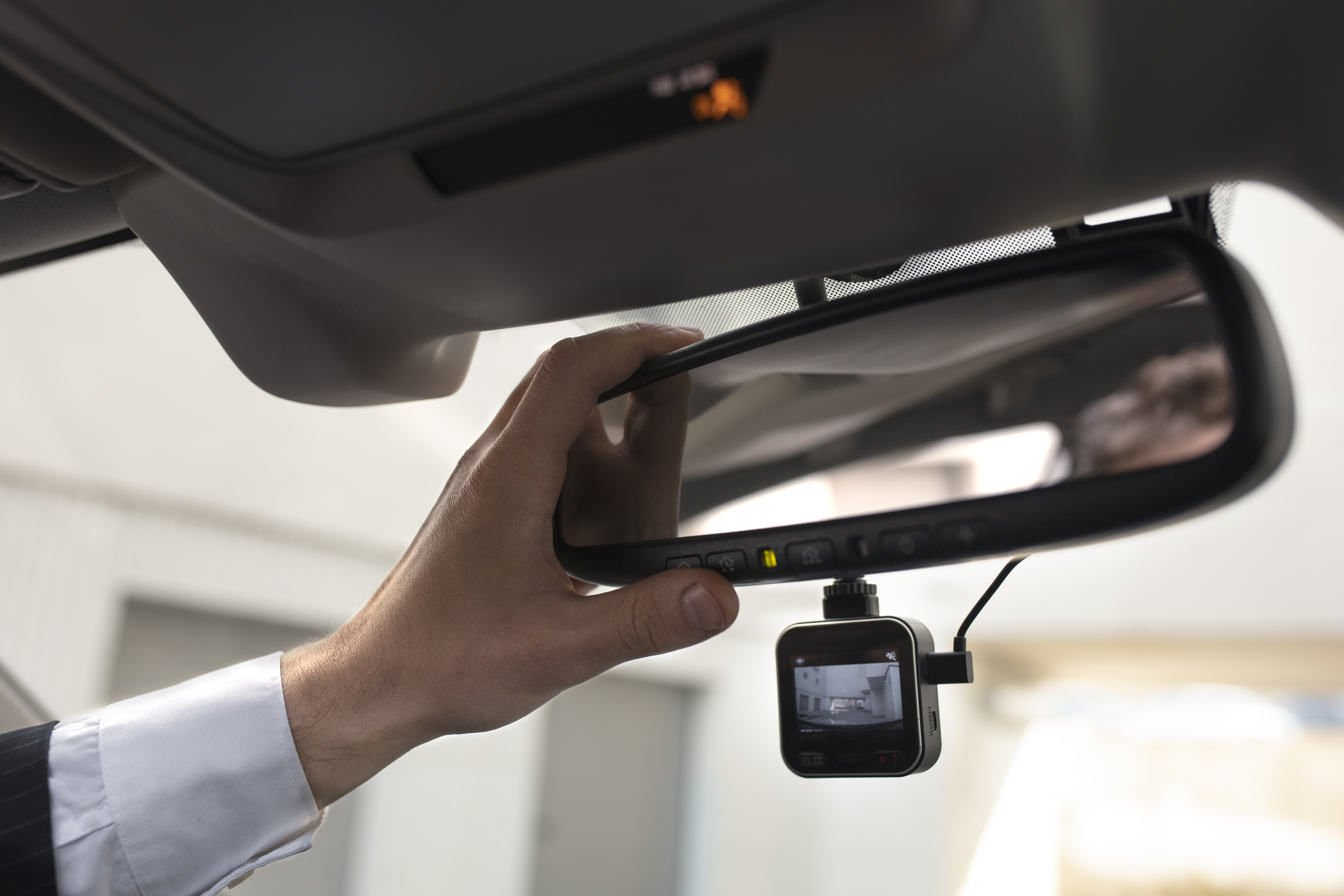
Dash cams are compact recording devices typically positioned on the dashboard or windshield. They automatically begin capturing video when your vehicle is running and store the footage on a memory card. Many models rely on loop recording, which replaces older footage with new clips unless you intentionally save something important.
Some cameras offer more than basic recording. Certain models activate when they detect movement or impact, even when your car is parked. This feature can be particularly helpful for parking lot collisions or hit-and-run situations. More advanced options may include dual-camera setups, night vision, GPS features, or cloud backups. Regardless of the added features, every dash cam ultimately has one main purpose: to provide a clear visual record of what occurred—something our team often finds extremely helpful when evaluating personal injury or product liability cases.
How Dash Cam Footage Helps After a Collision
One of the most valuable benefits of dash cams is their ability to capture exactly what happens in the moments surrounding a crash. When there are no eyewitnesses and both drivers have different recollections, footage can help clarify what actually occurred before, during, and after the impact.
A dash cam may reveal critical information such as lane position, traffic signals, or abrupt braking. This can be especially useful when trying to show that another driver drifted into your lane, failed to yield, or caused a rear-end collision. With this type of documentation, the often confusing aftermath of an accident can become much easier to navigate during insurance or legal discussions.
Helping Prevent Fraud and False Accusations
Although uncommon, staged accidents and fraudulent claims do happen. In these situations, video evidence can be a strong defense. There have been instances where dash cam footage exposed intentionally caused collisions or false stories designed to place blame on innocent drivers.
By capturing the actual event, a dash cam can help protect you from being wrongfully blamed. While no tool can stop every dishonest action, footage provides an objective record that makes it harder for misleading claims to stand—something especially important if your case involves complicated liability issues or potential traffic ticket disputes.
Documenting Hit-and-Run Incidents
Hit-and-run accidents are particularly frustrating because tracking down the responsible party can feel impossible. Dash cams may capture key details—such as a license plate number, vehicle make and model, or even the direction the car fled—that could help identify who caused the damage.
Cameras with parking mode offer an added advantage because they can record events triggered by movement or impact when the vehicle is unattended. This feature provides an extra layer of protection in situations where no driver is present to witness the incident.
Limitations You Should Be Aware Of
While dash cams offer several benefits, they are not an all-encompassing solution. They only record what is visible within their lens. If the crash happens outside of that frame, or if the footage is blocked, unclear, or overwritten before being saved, it may not be useful.
It’s also important to remember that dash cams document all actions—good and bad. If your own driving behavior contributed to the collision, that footage could also be used as evidence. The camera does not interpret events; it simply records them.
Legal and Privacy Considerations
Using a dash cam comes with certain responsibilities. Some states regulate where devices can be mounted, so proper placement is essential to avoid obstructing your view or violating local laws.
Privacy laws may also apply. States with two-party consent rules require everyone being recorded—such as passengers inside your car—to agree to audio recording. It’s equally important to handle stored footage carefully, especially if it may later be used as evidence. Maintaining the chain of custody can be crucial in insurance or legal cases, including criminal defense matters where video evidence may be reviewed by attorneys.
Should You Install a Dash Cam?
Choosing to install a dash cam is a personal decision that depends on your driving habits and comfort level. If you frequently commute, drive for work, or have previously dealt with disputed accidents, the advantages of having recorded footage may outweigh the drawbacks.
For some drivers, concerns about privacy, upkeep, or the possibility that footage could be used against them may make a dash cam less appealing. Either way, understanding how dash cam footage can be interpreted in insurance or legal contexts can help you make an informed decision.
If you’ve been in a crash and want to know how dash cam footage may impact your personal injury claim, getting professional guidance can make a difference. Video evidence can be powerful, but the way it’s handled and evaluated is just as important as what it shows. As a proud Hispanic attorney serving the Winston-Salem community, we’re here to help whenever you need support. Contact us for a free consultation—our team is ready to stand by your side.